Polyester vs. Plastic Strapping vs. Stretch Wrap: Which Secures Your Pallets?
· 6 min read · By Rob Puzio
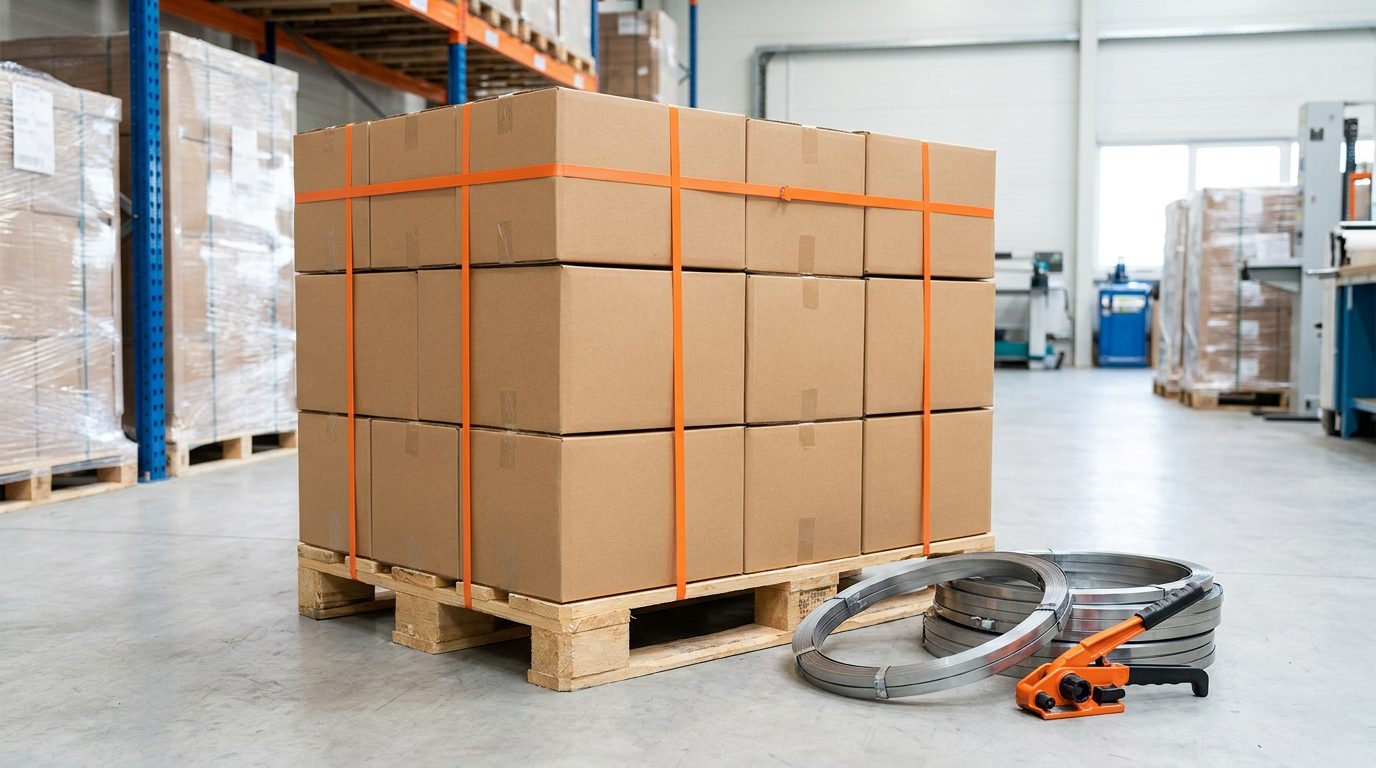
Every pallet leaving your dock has to survive braking, vibration and a few forklift moves. Three materials do most of that work: stretch wrap, plastic strapping and polyester strapping. They are not interchangeable. Each one does a different job, and the most common mistake is using the wrong one or relying on a single material when the load needs two. This guide compares them so you can match the material to the load.
First, the names
Strapping terms get mixed up, so here is how they line up:
- Plastic strapping usually means polypropylene (poly or PP) strap. It is the lightweight, economical option.
- Polyester strapping is a stronger plastic strap. Many buyers call plastic strapping "strapping bands" and use poly and polyester loosely, so confirm which one you mean.
- Steel strapping is a separate category for heavy, rigid or sharp-edged loads.
- Stretch wrap is film, not strap.
Plastic (polypropylene) strapping
Polypropylene strapping is lightweight, safe to cut and handle, and economical. It stretches slightly and recovers, which helps it hold tension on loads that settle in transit.
Best for: most cartons, bundles and lighter palletized goods.
Watch for: heavier or longer-haul pallets, where polyester holds tension better.
Polyester strapping
Polyester strapping holds tension better than polypropylene. That makes it the better fit for heavier loads and longer hauls.
Best for: heavier or longer-haul pallets where plastic strap would lose tension.
Watch for: matching hardware. Match the strap to a buckle or seal of the same width, or the joint becomes the weak point.
Stretch wrap
Stretch film holds cartons to each other. It wraps the whole load, keeps cartons from sliding apart, and for many shippers it is the baseline for every pallet. Clear film also lets receivers see the load and scan labels through the wrap.
Best for: keeping cartons together as a unit.
Watch for: heavy, tall or awkward loads where film alone may not be enough to hold the load to the pallet.
How the three compare
| | Plastic (PP) strapping | Polyester strapping | Stretch wrap |
|---|---|---|---|
| Main job | Bundles cartons and lighter loads | Holds heavier loads under tension | Holds cartons to each other |
| Tension over time | Stretches slightly and recovers | Holds tension better | Not a tension strap |
| Best load | Most cartons and palletized goods | Heavier or longer-haul pallets | Any palletized cartons |
| Handling | Lightweight, safe to cut | Match buckle or seal to width | Hand or machine |
Why the answer is often "both"
Stretch film holds cartons to each other. Strapping holds the load to the pallet and resists shifting under braking and vibration.
For heavier or taller loads, many shippers strap first, then wrap over the straps so the film keeps them in place. If you only wrap, a heavy load can slide on its base. If you only strap, cartons between the straps can shift or bulge.
Protect the cartons under the strap
Strapping under tension can crush carton edges, which is a common cause of damaged product. Corner boards, also called edge boards or edge protectors, sit on the vertical corners of the load. They spread strap pressure and add stacking strength to the corners, where loads fail first.
Use one under every strap on tall or heavy loads.
Matching strap width and strength
Wider strap spreads pressure and is less likely to cut into cartons. Poly strapping is commonly sold in widths from about 1/4 inch up to 5/8 inch or more, with higher break strengths for heavier loads. The strap, the buckle or seal, and the tool all need to match.
Plastic strapping kits bundle strap, buckles and a tensioner, which is a simple way for smaller shippers to get started.
Takeaway checklist: pick your securing method
- [ ] Load weight and height known
- [ ] Haul length noted (short local run or long haul)
- [ ] Light cartons only? Start with stretch wrap, add plastic strap if the load shifts
- [ ] Heavy or long-haul load? Ask about polyester strapping
- [ ] Heavy, rigid or sharp-edged load? Ask about steel
- [ ] Strap, buckle or seal and tool matched by width
- [ ] Corner boards under every strap on tall or heavy loads
- [ ] Strapping done before wrapping so film covers the straps
- [ ] Manual or machine application decided
- [ ] Coils per month estimated
What to send us
For a fast quote on strapping, send:
For film, add hand or machine use, gauge, roll width and length, and rolls per month. See our strapping and containment page and our stretch film and pallet wrap page, or browse the full packaging supplies hub.
- Strapping material
- Width and strength needed
- Manual or machine application
- Load weight
- Coils per month
Related: strapping and containment page · stretch film and pallet wrap page · packaging supplies hub
Strapping, film and labels on one order
We make PLU labels and custom product labels in Florida, with more than 40 years in the business. Add strapping and stretch film to the same request and keep it to one supplier and one shipment.
Get your free quote
Tell us your load type, strap width and monthly volume. We will quote it alongside your labels, usually within 24 hours. Call (248) 690-6777, 8am to 8pm, seven days a week, or get your free quote online.
Related: get your free quote
Frequently Asked Questions
What is the difference between plastic and polyester strapping?
Plastic strapping usually means polypropylene, which is lightweight and economical. Polyester holds tension better, so it suits heavier or longer-haul pallets.
Can I use stretch wrap instead of strapping?
For lighter, uniform loads, often yes. Strapping holds the load to the pallet and resists shifting, so heavier or taller loads usually need both.
Do I strap before or after wrapping?
Many shippers strap first, then wrap over the straps so the film keeps them in place.
Can I buy strapping kits?
Plastic strapping kits bundle strap, buckles and a tensioner for smaller shippers. Tell us your volume and we will quote what fits.
Need Custom Labels or Packaging Supplies?
Florida manufacturer, 40+ years of experience, proofs in 24 hours. Open 8am to 8pm, seven days a week.
Get a FREE Quote