How to Stock Safety Supplies for a Small Warehouse: A Practical Checklist
· 7 min read · By Rob Puzio
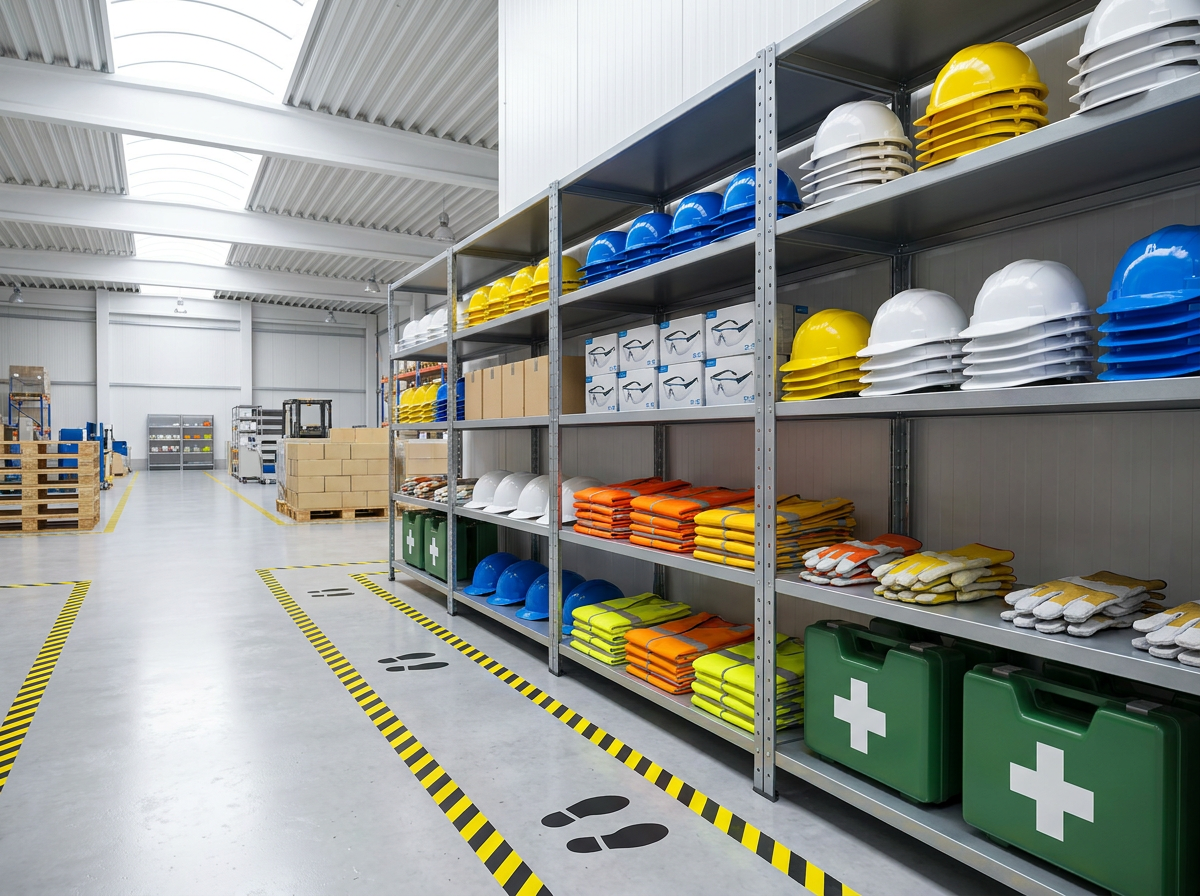
A small warehouse does not need a huge safety budget, but it does need the right items on the shelf before something goes wrong. Most injuries and near misses come from ordinary things: a slippery floor, a pallet in the wrong place, a missing glove or a first aid kit nobody can find. This guide covers how to stock safety supplies for a small warehouse, what to buy first, and how to keep it organized.
Start with the hazards you actually have
Do not buy from a generic list. Walk the building and note where people lift, drive equipment, handle chemicals, cut, climb or work near traffic. Each hazard points to a specific supply.
Ask the people who work there what has caused close calls. They usually know where the gaps are before anyone writes a report.
- Lifting and carrying: gloves, back support practices, hand trucks.
- Forklift and pallet jack traffic: floor marking, signs, high-visibility apparel.
- Cutting and strapping: cut-resistant gloves, safety glasses.
- Spills and wet areas: absorbents, caution signs, anti-slip surfaces.
Personal protective equipment basics
PPE is the most visible part of a safety stock. Keep a standard set in a fixed location, in the sizes your crew actually wears. Mixed sizes matter more than most owners expect, because gear that does not fit does not get worn.
Check any required gear against the rules that apply to your operation, and confirm requirements with your safety advisor or the relevant agency rather than guessing.
- Safety glasses, plus a few spare pairs for visitors.
- Work gloves in several sizes, and cut-resistant gloves where blades or strapping are used.
- High-visibility vests for anyone near moving equipment.
- Hearing protection where noise calls for it.
- Hard hats where overhead hazards exist.
- Closed-toe, slip-resistant footwear guidance for the crew.
Floor marking, signs and aisle control
Clear aisles prevent more problems than almost any other single habit. Floor marking tape shows where pallets, carts and walkways belong, and it makes it obvious when something is out of place.
Use consistent colors and keep them the same across the whole building so new hires learn them once. Replace worn tape before it peels and becomes a trip hazard itself.
- Mark walkways, pallet staging areas and equipment lanes.
- Keep exits, electrical panels and fire equipment clear and marked.
- Post wet floor and caution signs where you can reach them quickly.
- Use corner and edge protection where racks sit near traffic.
First aid, eyewash and spill response
A first aid kit is only useful if people know where it is and it is fully stocked. Mount it where it is easy to reach, and set a regular date to check expiration dates and refill used items.
If you handle cleaners, adhesives or other chemicals, add spill supplies and read each product's safety data sheet. Keep absorbent pads, a small waste bag and gloves together in one grab-and-go spot.
- First aid kit sized for the number of people on a shift.
- Eyewash where chemicals or debris create an eye risk.
- Spill kit or absorbent pads, matched to what you actually store.
- A fire extinguisher inspection routine with a written date.
Use labels to make safety visible
Labels turn safety rules into something people see at the moment they need them. Shelf labels show weight limits, bin labels show contents, and hazard or handling labels warn before someone opens a box or moves a pallet.
As a Florida label manufacturer with over 40 years of experience, we print custom and barcode labels in-house. Proofs go out within 24 hours, so you can review the wording and size before production.
- Rack and shelf labels with load or location information.
- Bin and container labels so supplies are easy to find and restock.
- Handling and caution labels on cartons and equipment.
- Barcode labels to track safety stock the same way you track product.
Related: Custom product labels · Barcode labels
Keep it organized and easy to restock
Safety stock fails when it is scattered. Pick one or two stations, label them clearly, and keep a short list of what belongs there. When an item is used, the next person should know to replace it.
Set a monthly walk-through. Check expiration dates, replace worn items and note what keeps running out. That list becomes your reorder plan.
- Create labeled safety stations near the dock and the main work area.
- Keep a simple checklist taped inside the cabinet or on the wall.
- Track reorder points so you never run out of gloves or glasses.
- Train new hires on where everything lives on day one.
Get safety, packaging and labels from one Florida source
We are a Florida manufacturer with over 40 years in the label industry, and we also supply safety supplies, warehouse supplies, boxes, tape and other packaging products at competitive prices. We are open 8am to 8pm, seven days a week, so you can reach a person when you have a question.
Tell us how your warehouse runs and what you need to keep on the shelf, and we will help you build a practical list.
Related: Browse safety and warehouse supplies · Get a free quote
Frequently Asked Questions
What safety supplies does a small warehouse need first?
Start with gloves, safety glasses, high-visibility vests, a stocked first aid kit, floor marking tape and spill supplies, then add items based on your specific hazards.
How often should safety supplies be checked?
A monthly walk-through works well for most small operations. Check expiration dates, replace used items and confirm every station is fully stocked.
Can labels help with warehouse safety?
Yes. Shelf, bin and handling labels make rules and contents visible where people work. We print custom and barcode labels in Florida with proofs in 24 hours.
Do you supply warehouse and safety products as well as labels?
Yes. We offer safety, warehouse, packaging and shipping supplies at competitive prices. Request a free quote to get started.
Need Custom Labels or Packaging Supplies?
Florida manufacturer, 40+ years of experience, proofs in 24 hours. Open 8am to 8pm, seven days a week.
Get a FREE Quote