How to Choose UV Resistant Labels for Outdoor Products
· 7 min read · By Rob Puzio
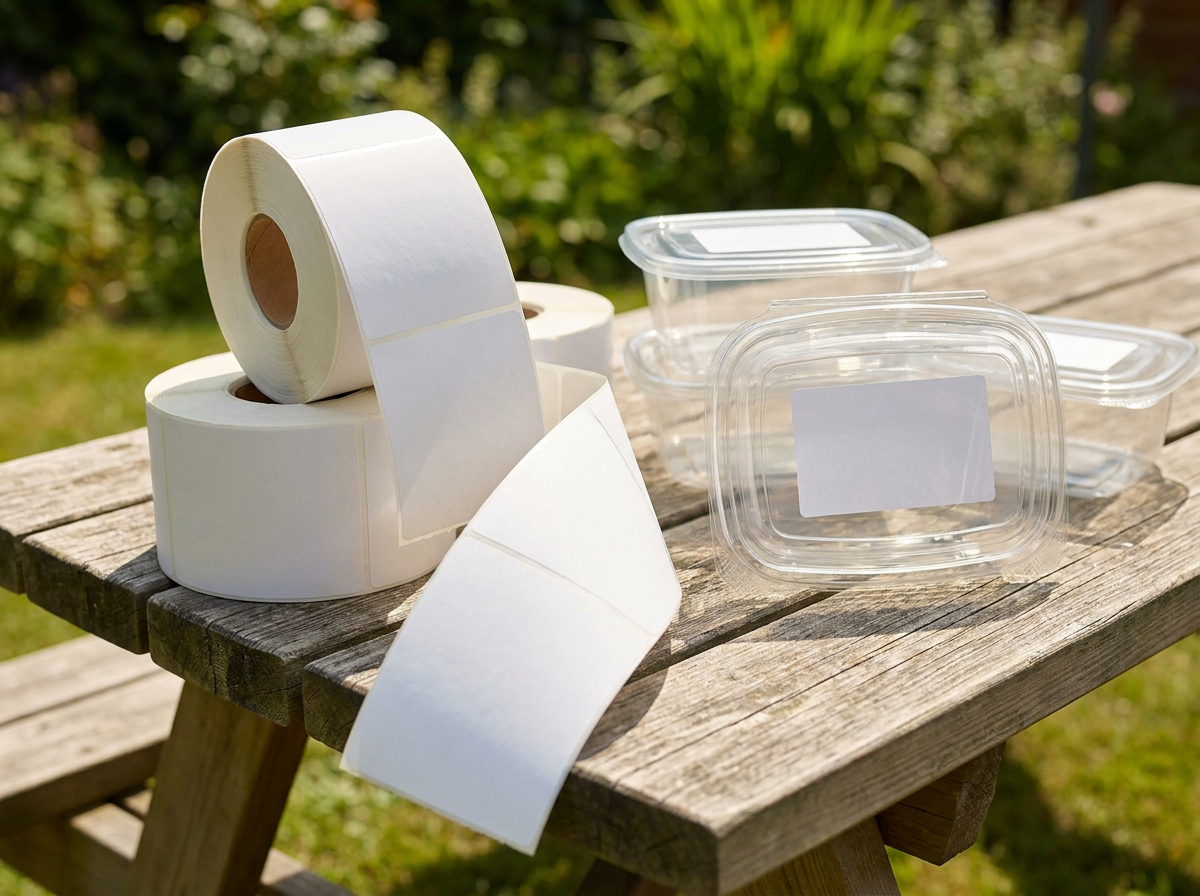
Sunlight is hard on labels. Inks fade, paper yellows, adhesive softens and edges lift. If your product lives outdoors, in a truck bed, on a patio or in a garden center, the label has to be built for it. This guide explains how to choose UV resistant labels for outdoor products, and what to tell your label manufacturer so you get the right construction the first time.
What sun and weather actually do to a label
Ultraviolet light breaks down the dyes in many inks, which is why a bright red label turns pink after a season in the sun. Heat adds to the problem by softening adhesive and making materials expand and contract. Rain and humidity then work at the edges, where moisture can creep under the label.
A label is a stack of parts: the face material, the ink, an optional protective layer, the adhesive and the liner. Outdoor performance depends on all of them working together, not on one special feature.
- Fading: ink loses color under long UV exposure.
- Yellowing and brittleness: common with uncoated paper and some films.
- Adhesive creep: heat softens adhesive and can cause oozing or shifting.
- Edge lift: moisture and temperature swings loosen the bond over time.
Start with the face material
Paper is the cheapest option, but it absorbs moisture and is rarely the right choice for long outdoor life. Synthetic face materials such as polypropylene, polyester and vinyl resist water and do not break down the way paper does.
Which one fits depends on the surface and the application. Flexible containers usually call for a film that bends with them. Rigid surfaces can use a stiffer film. Tell your supplier how long the label must last and what it will be exposed to, and they can recommend a material from there.
- Polypropylene: a common, cost-effective film for moisture and general outdoor use.
- Polyester: a stiffer, durable film often used where heat and abrasion matter.
- Vinyl: conforms well to curved or flexible surfaces.
- Paper: best kept for indoor or short-term use.
Ink and printing method matter as much as the material
Not all inks are equal under UV. Some ink systems are formulated for better lightfastness than others, and the printing method affects which options are available. Ask your manufacturer which inks they use for outdoor jobs and what exposure they are suited for.
Color choice plays a part too. Strong reds and certain bright tones tend to show fading sooner than darker, more stable colors. If a brand color is known to fade, a protective layer can help, and a simple design with fewer colors is often easier to keep consistent.
- Ask for inks suited to outdoor or long-life labels.
- Expect bright reds and similar colors to be the first to fade.
- Keep barcodes in high-contrast black on a light background so they stay scannable.
Add a laminate or overcoat for extra protection
A clear laminate or varnish sits over the printed surface and shields the ink from sunlight, moisture and scuffing. For labels that will see weather every day, this is often the single most useful upgrade.
Laminates come in gloss and matte finishes. Gloss tends to look vivid, while matte reduces glare, which can help barcodes scan under bright light. Choose based on how the label will be read as well as how it should look.
- Laminate protects ink from UV, water and rubbing.
- Matte finishes cut glare for scanning outdoors.
- Gloss finishes give stronger color pop for shelf appeal.
Related: Custom product labels · Barcode labels
Match the adhesive to the surface and the temperature
Adhesive is where outdoor labels often fail. Surface type matters: smooth plastic, textured plastic, glass, metal and coated cardboard all bond differently. Temperature matters too, both at the time of application and over the life of the label.
If your product is applied cold, filled hot or left in a hot vehicle, say so. A manufacturer can pick an adhesive for the application temperature and the service temperature. For food contact or produce, the adhesive must also be food safe, which is a separate requirement from outdoor durability.
- Identify the surface: plastic, glass, metal, textured or coated.
- State the temperature range during application and during use.
- Confirm food-safe adhesive when the label touches food or produce.
- Test on the real container before ordering a full run.
Test before you commit to a full run
The most reliable way to choose is to test. Apply samples to your actual containers, let the adhesive cure, then expose them to the conditions they will face. Leave some in direct sun, wet some, and flex or rub others.
Look at color, edge adhesion and readability of text and barcodes. A short test can save a reorder. As a Florida manufacturer with more than 40 years in the label business, we see how sun, heat and humidity treat labels, and we send proofs within 24 hours so you can confirm size, layout and construction before production.
- Apply samples to the real container, not a stand-in.
- Expose samples to sun, moisture and handling.
- Check fading, lifting and barcode scanning.
- Approve the proof before the full run starts.
Related: Get a free label quote · Food and produce labels
What to tell your label manufacturer
A good quote starts with good information. The more specific you are about where the label will live, the better the recommendation. Our team is open 8am to 8pm, seven days a week, and can walk through the options with you.
- Container material, shape and size.
- Where the product is used or stored, and for how long.
- Expected temperature range and exposure to rain or sun.
- Whether the label touches food, and any retailer requirements.
- Label size, quantity and the application method you use.
Frequently Asked Questions
Are UV resistant labels the same as waterproof labels?
Not always. Waterproof refers to resistance to moisture, while UV resistance refers to how well the ink and material hold up in sunlight. Outdoor labels usually need both, so ask for a construction that covers both.
Will a UV resistant label never fade?
No label lasts forever in direct sun. The right materials, inks and laminate slow fading and extend useful life. Your manufacturer can advise on realistic expectations for your conditions.
Does a laminate help with barcode scanning outdoors?
It can. A matte laminate reduces glare and protects the printed barcode from scuffing and fading, which helps keep it readable.
How fast can I see a proof for outdoor labels?
We send proofs within 24 hours so you can approve size, layout and materials before production begins.
Need Custom Labels or Packaging Supplies?
Florida manufacturer, 40+ years of experience, proofs in 24 hours. Open 8am to 8pm, seven days a week.
Get a FREE Quote