How to Choose Packing Tape for Shipping Boxes: Types, Thickness and Use Cases
· 7 min read · By Rob Puzio
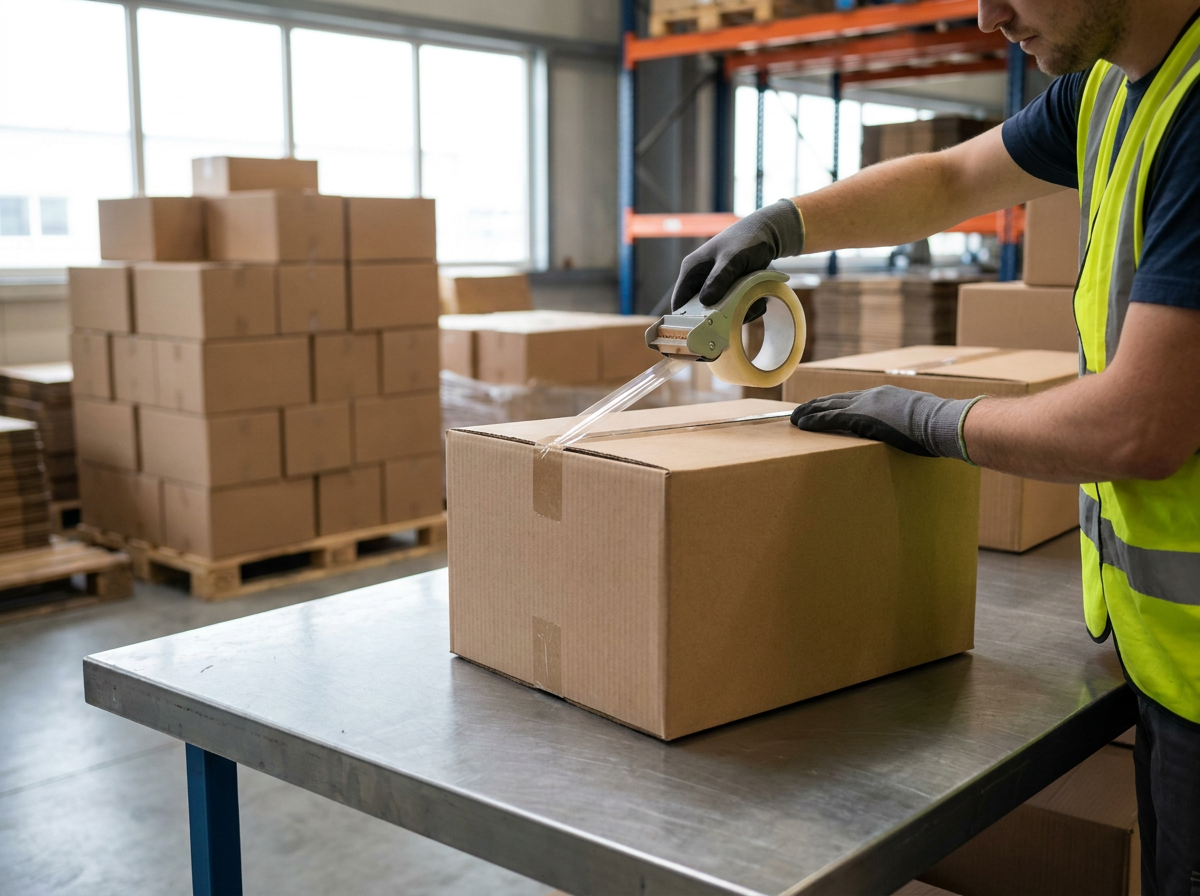
A box that pops open in transit costs you a replacement, a shipping label and a customer's patience. Most of the time the box was fine and the tape was the weak point. Tape looks like a simple commodity, but adhesive, thickness and width all change how well a seal holds. Here is how to choose packing tape for shipping boxes so your cartons arrive closed.
Start with what you ship and how
Before comparing tapes, describe the shipment. The weight of the box, the distance it travels and the conditions it passes through decide how much tape performance you need.
A light box going across town is a different job from a heavy carton that gets handled by several carriers and sits in a hot or cold trailer.
- Weight of a typical packed box.
- Box material: new corrugated, recycled or coated board.
- Storage and transit conditions: heat, cold, humidity or dust.
- Volume: a few boxes a day by hand, or hundreds on a taping machine.
Acrylic, hot melt and water-activated tape
The adhesive is the most important choice. Each type has a place.
Acrylic tape stays clear, holds up well over time and handles a wide temperature range, which makes it a common choice for storage and mixed conditions. Hot melt tape grips fast and has strong initial tack, which suits quick, high-volume sealing at normal temperatures. Water-activated paper tape bonds into the box fibers when wet and gives a tamper-evident seal.
- Acrylic: good aging, wide temperature range, quiet unwind.
- Hot melt: fast grab, strong on dusty or recycled board, best at room temperature.
- Water-activated paper tape: very strong seal, needs a dispenser, hard to open without showing it.
- Match the adhesive to your climate and storage time, not just the price.
Thickness and film strength
Tape thickness is measured in mils. A thicker film resists stretching and tearing, and it holds the flaps shut against the pressure of heavy contents.
Light-duty tape works for small, light cartons. Heavier boxes and long shipping routes call for a stronger, thicker film. If your tape tears or the flaps lift at the corners, step up in thickness before you change anything else.
- Light cartons: standard grade tape is usually enough.
- Heavy or long-haul cartons: choose a thicker, higher-tensile film.
- Overstuffed boxes put extra strain on the seam, so use stronger tape or a bigger box.
Choose the right width and length
Most cartons are sealed with tape about two inches wide. Wider tape covers more of the seam and adds holding power on heavier boxes.
Check the roll length against how you work. Longer rolls mean fewer changes at the packing table, and they fit machine dispensers built for high volume.
- Run the tape the full length of the center seam.
- Extend the tape down each end panel by a couple of inches.
- Add edge seams or an H-pattern on heavy boxes.
- Use a dispenser that matches the roll core size.
Hand dispensers or taping machines
If you seal a few boxes a day, a good hand dispenser is all you need. It gives steady tension and a clean cut, and it saves your hands.
Once you pack in volume, a case sealer saves time and makes the seals consistent. Machines apply tape with even pressure, which cuts down on loose corners and wasted tape.
- Low volume: hand-held dispenser.
- Steady volume: bench-top or semi-automatic case sealer.
- Ask your tape supplier which tape grades run best on your machine.
Printed tape, labels and the full carton
Tape is one part of a good carton. The box, the void fill and the shipping label all affect whether the package arrives intact and gets delivered.
A shipping label that peels off defeats everything else. Use labels made for your surface and conditions, and keep barcodes on a flat spot away from the tape seam so they scan. As a Florida label manufacturer with over 40 years of experience, we print custom and barcode labels in-house and send proofs within 24 hours.
- Do not place labels or barcodes over a tape seam.
- Pair the tape with a sturdy corrugated box rated for the weight.
- Use custom labels when you need branding or consistent barcodes.
Related: Barcode labels · Custom product labels
Get supplies and labels from one Florida source
We are a Florida manufacturer with over 40 years in the label industry, and we also supply packaging and shipping supplies at competitive prices. We are open 8am to 8pm, seven days a week, so you can reach a person when you need an answer.
Tell us what you ship and how, and we will point you to the right tape and the right labels.
Related: Get a free quote
Frequently Asked Questions
Is hot melt or acrylic packing tape better?
It depends on conditions. Acrylic holds up over time and across a wide temperature range. Hot melt grips fast and suits quick sealing at normal temperatures.
What width of packing tape should I use?
Two-inch tape is common for standard cartons. Heavier boxes benefit from wider tape and extra seams on the edges.
Why does my packing tape keep lifting at the corners?
Overfilled boxes, dusty or recycled board, or tape that is too thin or the wrong adhesive for your conditions are the usual causes. Try a stronger tape or a larger box.
Can you supply both labels and packing tape?
Yes. We print custom labels in Florida and also offer packaging and shipping supplies. Contact us for a quote.
Need Custom Labels or Packaging Supplies?
Florida manufacturer, 40+ years of experience, proofs in 24 hours. Open 8am to 8pm, seven days a week.
Get a FREE Quote