How to Choose Label Roll Size and Core Size for Your Printer
· 7 min read · By Rob Puzio
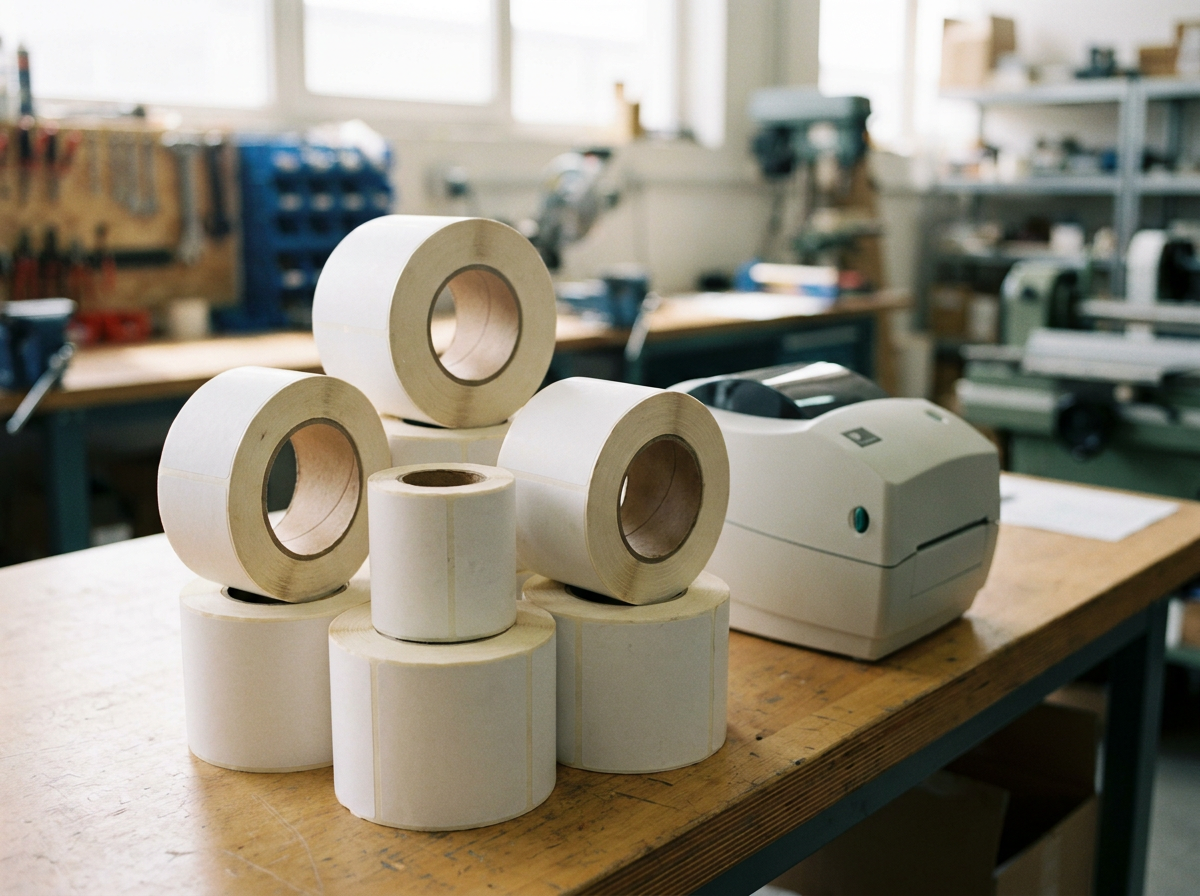
A label that looks right but will not fit the machine is a wasted order. Roll size and core size decide whether labels load, feed and unwind the way they should. This guide explains how to choose label roll size and core size for your printer or applicator, what to measure, and what to tell your supplier before you order.
Why roll size and core size matter
Every printer and applicator has a spindle or hub that holds the roll. If the core does not fit that hub, the roll wobbles, slips or will not mount at all. If the roll is too wide or too large in diameter, it rubs the housing and feeds unevenly.
Getting these specs right the first time saves reorders, returns and downtime on the line.
- Core size controls how the roll mounts on the machine.
- Outside diameter controls whether the roll fits inside the housing.
- Roll width controls how it tracks through the feed path.
Start by measuring your machine
Check the manual or the machine itself for the maximum roll diameter, the core size it accepts and the label width range. If you cannot find the manual, measure the hub and the space around it.
Write the numbers down and send them with your quote request. It is faster than guessing and it avoids mistakes.
- Hub or spindle diameter, which sets the core size.
- Maximum outside roll diameter the housing allows.
- Minimum and maximum label width the feed path handles.
- Whether the machine uses a rewind or a dispense-only setup.
Pick the right core size
Cores come in several common sizes, and the machine usually accepts only one or two of them. Desktop printers often take a smaller core, while larger industrial machines take a bigger one. Always confirm against your own equipment instead of assuming.
If your machine has core adapters, you may have some flexibility. Ask your supplier whether the adapter works with the labels you plan to buy.
- Match the core to the hub, not to the label size.
- Use adapters only when the machine maker supports them.
- Keep the same core size across reorders for consistency.
Choose roll length for your volume
A longer roll means fewer changeovers, but it must stay under the machine's diameter limit. A shorter roll is easier to handle and store, but it means more stops.
Look at how many labels you use per shift. Pick a roll length that lasts a full shift or a full batch so changeovers happen at natural breaks.
- High volume: longer rolls, within the diameter limit.
- Low or mixed volume: shorter rolls to reduce waste.
- Test runs: a small roll count before committing to a large order.
Winding direction and label orientation
Labels can be wound with the print facing out or in, and the label can leave the roll head first or foot first. Your printer or applicator is built for one orientation. The wrong one means labels feed upside down or backwards.
Tell your supplier the model of the machine, or send a sample roll that already runs correctly. That settles the question quickly.
- Confirm unwind direction before you order.
- Send a sample roll or the machine model when possible.
- Check the first roll on the machine before approving a large run.
Related: Custom product labels · Barcode labels
Material and storage affect how rolls run
Roll size is only part of the picture. The label material and adhesive also change how the roll feeds, especially in heat, humidity or cold. Store rolls flat or on their cores in a clean, dry place, away from direct sun.
If labels go on food or produce, the adhesive has to be food-safe. We use FDA-compliant adhesive on our labels, and we can match it to your surface and conditions.
- Store rolls in a cool, dry area.
- Keep rolls in their packaging until needed.
- Choose material and adhesive for the surface and temperature.
What to send your label manufacturer
Send your label size, quantity, material, core size, maximum roll diameter and machine model. With that, a manufacturer can quote correctly and wind the rolls to run on your equipment.
We are a Florida manufacturer with over 40 years in the label industry. Proofs go out within 24 hours, and we are open 8am to 8pm, seven days a week, so you can get an answer when you need it.
- Label width and length.
- Core size and maximum roll diameter.
- Printer or applicator model.
- Material, adhesive and where the label will be used.
Related: Get a free quote · PLU labels
Frequently Asked Questions
How do I find my printer's core size?
Check the manual for the supported core size, or measure the hub the roll sits on. Send the number, or the machine model, with your quote request.
Can I use a larger roll than my printer was designed for?
Not safely. A roll that exceeds the maximum diameter can rub the housing and feed unevenly. Stay within the limit listed for your machine.
Does winding direction really matter?
Yes. Your machine expects labels to unwind in one direction. The wrong direction can make labels feed backwards or upside down.
Can you make custom rolls to fit my applicator?
Yes. Tell us the label size, core size, maximum roll diameter and machine model, and we will quote rolls wound to run on your equipment.
Need Custom Labels or Packaging Supplies?
Florida manufacturer, 40+ years of experience, proofs in 24 hours. Open 8am to 8pm, seven days a week.
Get a FREE Quote