Food Safe Labels for Produce, Food Packaging, Beverage Containers, and Fresh Foods
August 30, 2026 · 8 min read
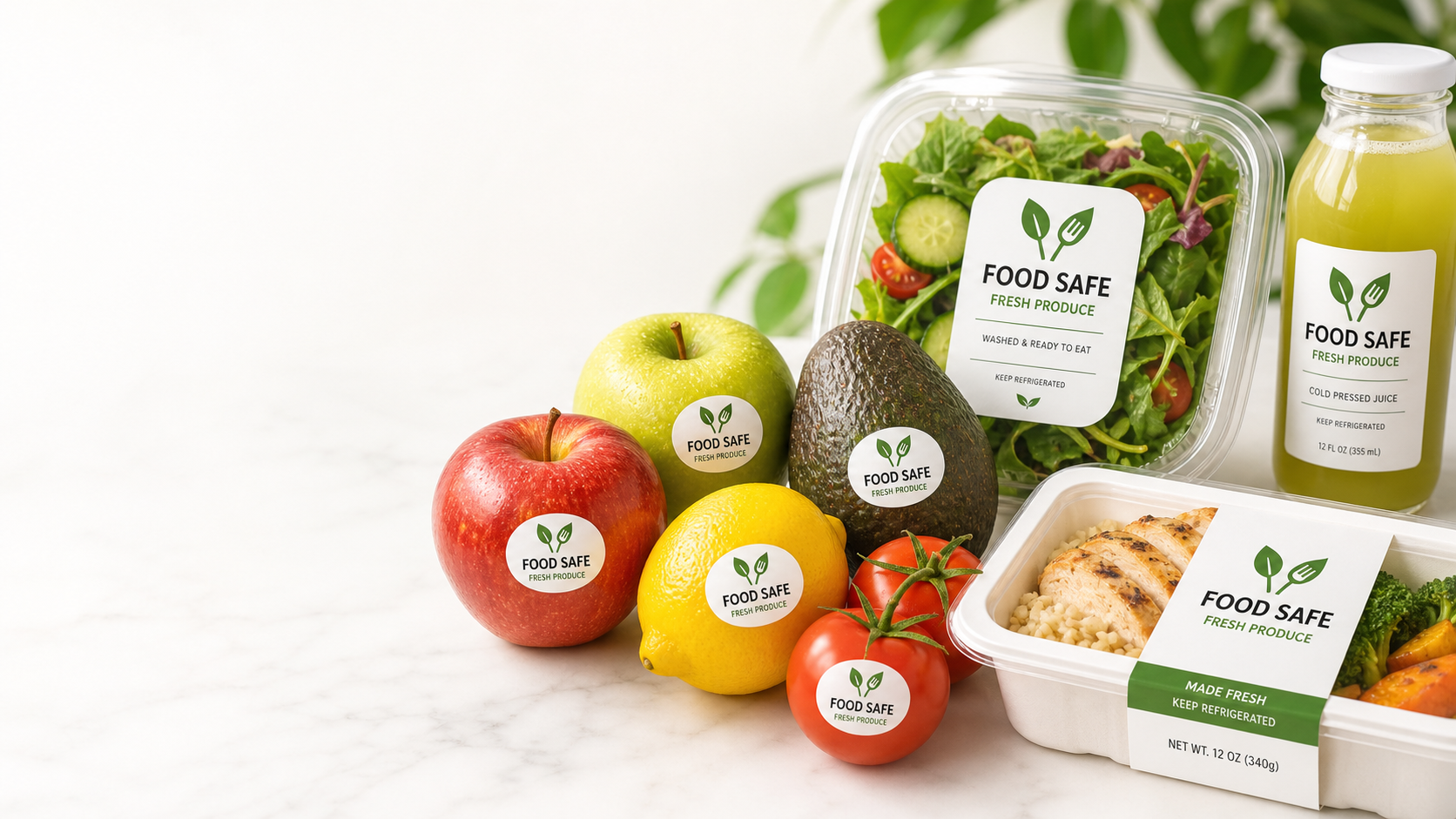
Food-safe labels for direct food contact and packaging help ensure compliance and communicate product information
Food businesses need labels that do more than look good. When labels are used on produce, food containers, packaging, beverages, or prepared foods, the material and adhesive must be appropriate for the intended application.
Food-safe labels are commonly used by growers, produce packers, food manufacturers, restaurants, bakeries, meal-prep companies, grocery departments, beverage brands, and specialty food businesses. The correct label construction depends on whether the label is applied directly to food, applied to packaging that contacts food, or used only on secondary packaging.
What Does "Food Safe" Mean for Labels?
Food-safe labeling is not a one-size-fits-all category. The right material and adhesive depend on how and where the label is used.
For example, there is a difference between:
- A produce sticker applied directly to an apple
- A label applied to the outside of a sealed sauce jar
- A label applied to a bakery box
- A label used on a meal-prep container
- A closure seal applied across a takeout box
- A date label used on a reusable food-storage container
- A sticker on secondary packaging that never contacts food
Businesses should clearly explain the intended use to the label supplier so the supplier can recommend the appropriate material and adhesive construction.
Food-Safe Labels for Fresh Produce
Fresh produce stickers are one of the most common direct food-contact label applications. Growers, packers, distributors, and retailers may use custom PLU labels on fruits and vegetables for PLU identification, brand recognition, organic designations, country-of-origin information, and promotional messaging.
Produce label applications can include:
- Apples
- Citrus
- Avocados
- Tomatoes
- Pears
- Peaches
- Mangoes
- Kiwis
- Potatoes
- Cucumbers
- Melons
- Specialty produce
The label material and adhesive should be selected for the produce surface, storage conditions, and intended food-contact use.
Food-Safe Labels for Packaging
Many food labels are not placed directly on food, but they are still used on food packaging. These can include labels for jars, bottles, bags, boxes, pouches, trays, tubs, containers, meal kits, and beverage packaging.
Food packaging labels may display:
- Product name
- Ingredients
- Nutrition information
- Allergens
- Barcode
- Date code
- Lot number
- Storage instructions
- Brand identity
- Promotional information
Even when the label is applied only to the exterior of the package, the business should understand the packaging environment and any relevant food-contact requirements.
Adhesive Selection Is Critical
The adhesive is one of the most important parts of a food label. It determines how the label sticks, how it performs in cold or wet conditions, and whether it is suitable for the intended application.
Common considerations include:
- Direct food-contact use
- Indirect food-contact use
- Permanent adhesion
- Removable adhesion
- Freezer-grade performance
- Refrigerated performance
- Moisture resistance
- Curved package surfaces
- Textured packaging
- Oil or grease exposure
A label used on a fresh apple may require a different adhesive system than a label used on a refrigerated deli container or a dry bakery box.
Food-Safe Labels for Restaurants and Meal Prep
Restaurants, caterers, meal-prep businesses, and grocery prepared-food departments often need labels for containers, bags, trays, bowls, and packaging seals.
These labels may communicate:
- Product name
- Ingredients
- Allergen information
- Reheating instructions
- Storage instructions
- Use-by date
- Prepared date
- "Keep Refrigerated" message
- "Sealed for Freshness" message
- Tamper-evident instruction
- Restaurant branding
For refrigerated and prepared foods, label performance under moisture and condensation is especially important.
Document the Intended Use
Food businesses should request relevant documentation for the specific label construction and intended application. A general statement about "food-safe labels" is less helpful than documentation tied to the actual material, adhesive, and use conditions.
It is also important to distinguish food-contact suitability from performance. A label may be suitable for a specific food-contact scenario but still need the correct adhesive and material to stay attached during refrigeration, shipping, handling, or freezer storage.
Build a Safer, More Professional Packaging System
Food-safe labels help businesses identify products, communicate important information, support product handling, and create a professional brand presentation. The best label starts with a clear description of the package, food product, storage conditions, and intended contact scenario.
Related Articles
Need Food-Safe Labels?
Get a free quote for food-safe labels designed for your produce, packaging, or beverage application.
Get a FREE Quote