ECT Rating Guide for Produce Boxes: What Strength Do You Need?
· 6 min read · By Rob Puzio
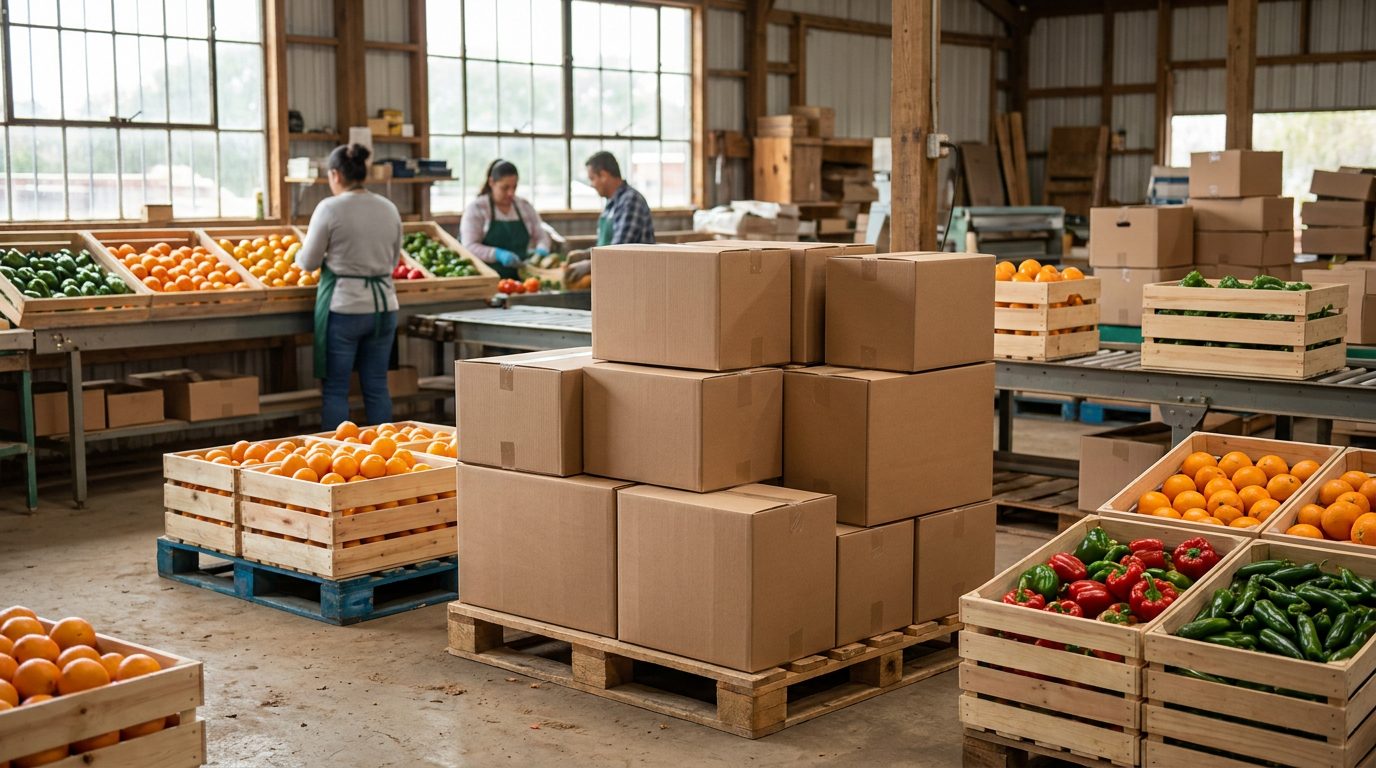
A produce box has a tough job. It holds product, stacks on a pallet, sits in a cooler, picks up moisture, and rides a truck. If the box is too weak, the bottom layer crushes and you pay for the claim. If it is stronger than you need, you pay for strength you never use. The number on the box that tells you where it lands is the ECT rating. Here is what it means and how to pick the right one for your fruit or vegetable.
What ECT means
ECT stands for edge crush test. It indicates how much top-to-bottom load a box can bear, which matters most when you stack pallets. Think of it as the box's stacking strength.
You may also see burst (Mullen) rating. That measures puncture resistance instead of stacking strength. Both numbers describe the board, but for produce going onto tall pallets, ECT is usually the one that decides whether the bottom boxes survive.
Higher ratings handle heavier contents and taller stacks. Common ECT ratings run from 32 for lighter shipping to 44 or more for heavy-duty use.
What decides the ECT rating you need
There is no single right rating for all produce. Four factors drive the choice:
1. Product weight
Heavier product puts more load on the box walls and on every box below it. Dense items need more strength than light, airy ones.
2. Stack height
This is the big one. The taller the pallet, the more weight sits on the bottom layer. A rating that works for a short pallet may fail on a full-height one. Always spec the box for the bottom of the stack.
3. Storage conditions
Produce and cold-chain boxes face moisture. Condensation and ice weaken plain corrugated over time. Wax-treated or coated corrugated resists condensation and ice. If your product is cooled, stored cold or shipped on ice, tell your supplier up front.
4. Ventilation
Produce needs to breathe and cool, so boxes usually have vents or handholds. Openings remove some board from the walls, so strength and venting need to be considered together, not separately.
Common mistakes with produce box strength
- Choosing by price per box. A cheaper box that crushes costs more than the right box.
- Ignoring stack height. The rating must hold at the bottom of the tallest pallet you build.
- Forgetting the cold room. A box that is strong when dry may not be strong after hours in a humid cooler.
- Specifying strength without checking size. A box that is too big wastes material and lets product shift. One that is too small bulges and fails.
- Not checking buyer requirements. Some receivers have their own packaging expectations. Ask before you order.
Sizing is part of strength
Box dimensions are listed as inside length x width x height. Leave room for dividers or liners, and confirm the footprint fits your pallet pattern. A box that fits the pallet cleanly stacks column-on-column, and that alignment protects the strength you paid for.
Takeaway checklist: spec your produce box
Work through this before you request a quote:
If you cannot fill in every line, that is fine. Send what you have and we will help with the rest.
- [ ] Product and fill weight per box
- [ ] Tallest pallet stack you build
- [ ] Storage and transit conditions (dry, cold, humid, on ice)
- [ ] Cooling method (this affects whether wax-treated or coated board is worth asking about)
- [ ] Box dimensions, inside length x width x height
- [ ] Vents or handholds needed
- [ ] Printed or plain
- [ ] Quantity per order
- [ ] Delivery location
- [ ] Any buyer or receiver packaging requirements
What to send us
For a fast quote on corrugated and produce boxes, send:
Tell us your product, stack height and storage conditions and we will quote a box that holds up. We can quote standard and custom sizes. See what we offer on our corrugated and produce boxes page, or browse the full packaging supplies hub.
- Box dimensions
- Strength or burst rating
- Printed or plain
- Quantity per order
- Delivery location
Related: corrugated and produce boxes page · packaging supplies hub
Box, liner, film and label from one supplier
A produce shipment needs a box, a liner, a pallet wrap and a compliant PLU label. We make the labels and can quote the packaging that goes with them, so your supplier list gets shorter. Ask for a combined quote and we will price everything together.
How to test before you commit
Before ordering a full run, build a test pallet. Pack boxes the way you really pack them, stack to your tallest pallet height, and leave it in your real storage conditions for a day or more. Then look at the bottom layer. Bulging walls, crushed corners or sagging tops mean the rating is too low for that stack. If the bottom boxes look fine, you have a good spec to build on. Write down the result and send it to us with your quote request.
Get your free quote
Send us your box size, strength and quantity and we will respond with pricing, usually within 24 hours. Call (248) 690-6777, 8am to 8pm, seven days a week, or get your free quote online.
Related: get your free quote
Frequently Asked Questions
What does ECT mean on a box?
Edge crush test. It indicates how much top-to-bottom load a box can bear, which matters for stacking pallets.
What is the difference between ECT and burst rating?
ECT measures stacking strength. Burst (Mullen) rating measures puncture resistance.
Do I need wax-treated boxes?
It depends on your product and how you cool it. Wax-treated or coated corrugated resists condensation and ice. Tell us your product and cooling method and we will confirm the options.
Can you quote custom-size boxes?
Yes. Send your dimensions and quantity and we will confirm availability and pricing.
Need Custom Labels or Packaging Supplies?
Florida manufacturer, 40+ years of experience, proofs in 24 hours. Open 8am to 8pm, seven days a week.
Get a FREE Quote