Fruit Labels: A Complete Guide for Small Business Packaging
February 15, 2026 · 6 min read
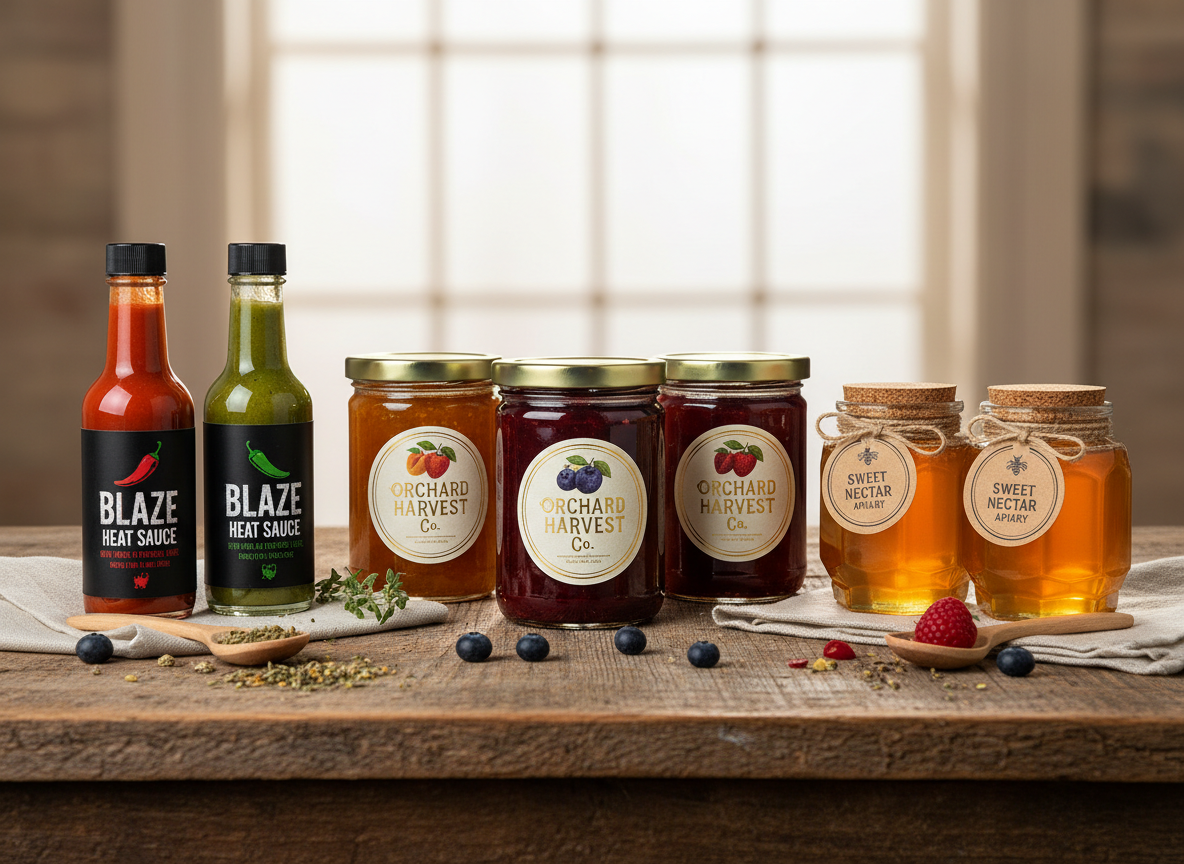
Your product label is the first thing a customer sees. It builds trust, communicates value, and — if you're in food — must meet strict legal requirements. Here's what you need to know before you order.
Why Your Label Is Your Most Important Marketing Tool
Studies show consumers make purchase decisions within 7 seconds of seeing a product on shelf. Your label does the heavy lifting: brand identity, product description, ingredients, and compliance — all in a few square inches. Getting it right isn't optional.
FDA Label Requirements for Food Products
If you're selling food in the US, the FDA requires specific information on your label. Missing any of these can result in fines or product recalls:
- Product name: Clear and prominent on the principal display panel.
- Net quantity: Weight, volume, or count — in both metric and US customary units.
- Ingredient list: Listed in descending order by weight.
- Nutrition Facts panel: Required for most packaged foods.
- Allergen declarations: The "Big 9" allergens must be clearly disclosed.
- Manufacturer name and address: Required on all food labels.
Choosing the Right Label Material
Label material matters more than most small businesses realize. The wrong material leads to peeling, smearing, or labels that fall off in refrigeration. Here's a quick guide:
- Paper labels: Cost-effective for dry goods stored at room temperature. Not suitable for refrigerated or frozen products.
- BOPP (polypropylene) labels: Waterproof, durable, and ideal for bottles, jars, and refrigerated products.
- Polyester labels: Extremely durable — great for products exposed to oils, chemicals, or extreme temperatures.
- Clear labels: Give a "no-label" look on glass or transparent packaging. Popular for premium products.
Design Tips That Convert
Great label design isn't just about looking good — it's about selling. Keep these principles in mind:
- Lead with your brand name and product name — don't bury them in small text.
- Use high-contrast colors — your label needs to pop on a crowded shelf.
- Keep it clean — less is more. Cluttered labels feel cheap.
- Use professional photography or illustration — stock images rarely look premium.
- Match your label shape to your packaging — a round label on a square jar looks like an afterthought.
How Many Labels Should You Order?
This is where many small businesses make a costly mistake. Ordering too few means higher per-unit costs and frequent reorders. Ordering too many ties up cash in inventory you may not use if your design changes.
A good rule of thumb: order enough for 3–6 months of projected sales. Most label manufacturers (including us) offer significant price breaks at higher quantities — so it's worth calculating your break-even point before placing an order.
Working With a Label Manufacturer
When you're ready to order, look for a manufacturer who:
- Offers free proofs before production
- Has fast turnaround — weeks of lead time can kill your launch
- Provides bulk pricing that scales with your growth
- Can handle variable data printing (lot numbers, expiry dates, barcodes)
- Uses FDA-compliant inks and adhesives for food contact surfaces
At PLU Label Stickers, we specialize in exactly this — custom food product labels with fast turnaround, competitive bulk pricing, and in-house manufacturing for consistent quality.
Related Articles
Ready to Order Custom Product Labels?
Get a free quote — FDA-compliant materials, fast turnaround, bulk pricing.
Get a FREE Quote