Waterproof Labels for Cold Storage and Freezers: What Actually Stays Stuck
· 7 min read · By Rob Puzio
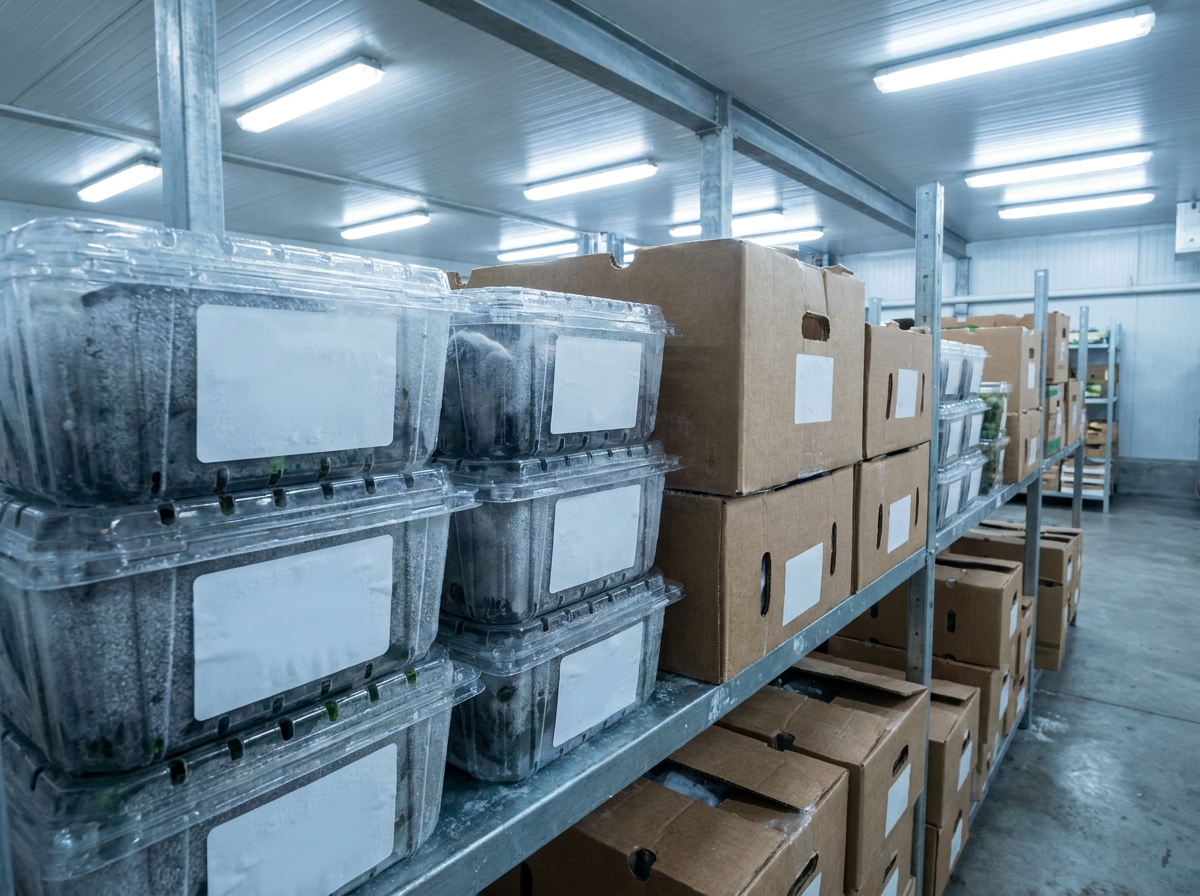
A label that looks fine at the packing table can curl, lift, or smear after a night in the cooler. Condensation, frost, and low temperatures attack the adhesive and the printed surface at the same time. The fix is not one magic product. It is choosing the right face stock, adhesive, and ink as a set, and testing them on your actual package.
Why Labels Fail in Cold and Wet Conditions
Most failures come from three things. Standard adhesives stiffen in the cold and lose tack, so the label never bonds. Moisture gets under the edge of a paper label and lifts it. And condensation on the package surface keeps the adhesive from touching the material it is supposed to grip.
When you see labels falling off in storage, the problem is usually the adhesive and the surface, not the printing.
- Cold-stiffened adhesive that never gets a proper bond
- Paper face stock that absorbs water and curls
- Condensation or frost on the package at the time of application
- Ink that smears or fades when wet
Pick a Waterproof Face Stock
Plain paper is the weak link in a cold, wet room. Synthetic face stocks such as polypropylene and polyester do not absorb water, so they stay flat and the printing stays sharp. Coated or laminated paper can work for lighter exposure, but if labels will sit in frost or standing moisture, a film is the safer choice.
- Polypropylene: a common, flexible choice for coolers and refrigerated packaging.
- Polyester: tougher and more stable, a good fit for harsher conditions and longer storage.
- Coated paper: acceptable for short, dry-ish cold holds, not for frost or wet washdowns.
Match the Adhesive to the Temperature
Adhesive is where cold-storage labels are won or lost. There is a big difference between the temperature a label is applied at and the temperature it lives at. Many adhesives bond fine at room temperature and then hold in the cold. Others must be applied cold, and need a freezer-grade formula.
Tell your label supplier two numbers: the temperature at application and the lowest temperature in storage. That one conversation prevents most problems.
- Refrigerator or cooler use: a permanent, cold-tolerant adhesive is usually enough.
- Freezer use: ask for a freezer-grade adhesive designed to stay tacky at low temperatures.
- Applied to wet or frosty surfaces: ask for an adhesive built for moisture, and dry the surface when you can.
Food Contact Matters for Produce and Food Packaging
If a label touches fruit, vegetables, or other food directly, the adhesive has to be food safe. Every label we make for direct food contact uses FDA-compliant adhesive under 21 CFR 175.105. Waterproof does not have to mean unsafe. You can have both, and major retailers expect both.
Related: PLU labels for produce · Custom product labels
Protect the Print: Ink, Coatings, and Barcodes
A waterproof label with smeared ink is still a failed label. Water-resistant inks and a protective overcoat or laminate keep text and barcodes readable through condensation and handling. Barcodes in particular need to stay high contrast with a clear quiet zone, or scanners at receiving will reject them.
- Use a moisture-resistant ink or overlaminate for labels exposed to water or frost.
- Keep barcodes high contrast and leave the quiet zone clear.
- Avoid placing labels over seams, ridges, or corners where they are more likely to lift.
Related: Barcode labels
Test Before You Commit to a Big Run
The most reliable step is also the cheapest: put a sample on your real package and leave it in your real storage conditions. Check it after a day, and again after a week or longer if your product sits that long.
- Apply the sample to the actual package, clean and at your normal application temperature.
- Store it where the product will be stored, including the coldest spot.
- Check for lifting at the edges, curling, smearing, and scan quality.
- Adjust the adhesive or face stock before you order the full quantity.
Get Cold-Ready Labels From a Florida Manufacturer
We are a Florida manufacturer with more than 40 years in the label industry, and we make labels directly, with no brokers in between. Send us your package type, application temperature, and storage conditions. Proofs go out within 24 hours, and we are open 8am to 8pm, seven days a week. If you also need shipping and packaging supplies, you can get those from American Price Mark.
Related: Get a free quote · Packaging and shipping supplies at American Price Mark
Frequently Asked Questions
What temperature can waterproof labels handle?
It depends on the adhesive and face stock. Standard adhesives often struggle in the cold, while freezer-grade adhesives are made for low temperatures. Tell us your application and storage temperatures and we will recommend the right materials.
Can I apply labels to a wet or frosty package?
It is best to apply to a clean, dry surface. If that is not possible, ask for an adhesive designed for moisture and test it first on your actual package.
Are waterproof labels safe for food contact?
They can be. Our labels for direct food contact use FDA-compliant adhesive under 21 CFR 175.105, and we can match waterproof materials to that requirement.
Need Custom Labels or Packaging Supplies?
Florida manufacturer, 40+ years of experience, proofs in 24 hours. Open 8am to 8pm, seven days a week.
Get a FREE Quote