Thermal Transfer Labels vs Direct Thermal: Which Should You Buy?
· 7 min read · By Rob Puzio
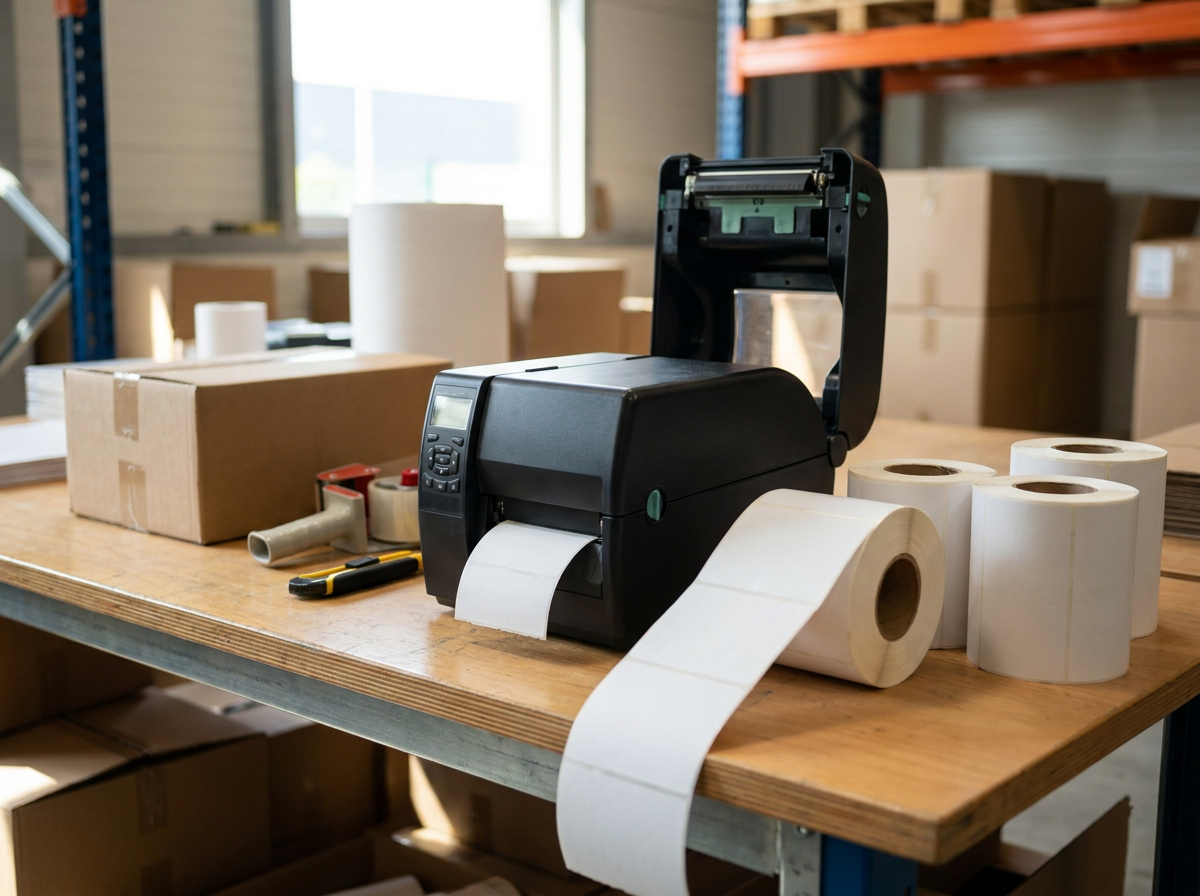
If you print barcodes, shipping labels, or product labels on a thermal printer, you have two choices: thermal transfer or direct thermal. They look similar on the roll, and they run in similar printers, but they are not interchangeable. Pick wrong and you get faded barcodes, failed scans, or paying more than you need to. This guide explains the difference in plain terms so you can buy the right label the first time.
How Each Printing Method Works
Direct thermal labels are coated with a heat-sensitive layer. The printer head heats the label surface and the coating turns dark where the image should be. There is no ink, toner, or ribbon.
Thermal transfer labels use a ribbon. The printer head heats the ribbon, and the ink on the ribbon melts onto the label surface. The image is a layer of ink on the label, not a reaction inside the coating.
That one difference explains almost everything else: durability, cost, supplies, and what each type is good for.
- Direct thermal: heat plus a coated label. No ribbon.
- Thermal transfer: heat plus a ribbon plus a label stock that accepts the ink.
Durability: How Long Does the Print Last?
Direct thermal print is sensitive to heat, light, and friction. Left in a hot truck, a sunny window, or a warm storage area, the whole label can darken over time. Scratching or rubbing can also leave marks. For a label that only has to last days or a few weeks, that is usually fine.
Thermal transfer print is far more stable. Because the image is ink on the surface, it holds up better against heat, light, abrasion, and in many cases moisture and chemicals, depending on the ribbon and label material you choose. If the label has to be readable months or years from now, thermal transfer is the safer pick.
- Short-term labels, such as shipping labels and receipts: direct thermal is often enough.
- Long-term labels, such as asset tags, product labels, and inventory: thermal transfer is the better fit.
- Outdoor or hot storage: favor thermal transfer.
Cost: Ribbon Versus No Ribbon
Direct thermal looks cheaper because there is no ribbon to buy, change, or run out of. Fewer supplies also means fewer things to go wrong on a busy packing line, and the printer is simpler to operate.
Thermal transfer adds the ribbon cost and a little more setup, but it lets you use a wider range of label materials, including paper, polypropylene, and polyester. When you count the cost of reprinting faded labels or losing scans, thermal transfer can be cheaper for any label that has to last.
The honest way to compare is cost per usable label, not cost per roll. If a label has to be reprinted because it faded, the cheap roll was not cheap.
Which Printer Do You Need?
Many thermal printers can only run direct thermal. Others support both methods, and the ribbon is simply left out when you print direct thermal. Before you order labels, check your printer model so you know what it supports.
If you are buying a new printer and your needs might change, a model that supports both gives you room to move. It is easier to start with a flexible printer than to replace one later.
- Check whether your printer has a ribbon carrier.
- Confirm the label width and roll core size your printer accepts.
- Confirm the print resolution is high enough for the barcode size you need.
Related: Barcode labels
Matching Label Type to the Job
Start with how long the label has to be readable and what it will be exposed to. Then pick the printing method that fits.
Shipping and carrier labels are usually short-lived, so direct thermal is common. Warehouse bin and shelf labels sit in one place for a long time, which favors thermal transfer. Product labels that reach a customer, especially on food or packaged goods, need to stay clean and scannable, so thermal transfer on a durable material is usually the right choice.
- Shipping labels: direct thermal is usually fine.
- Warehouse racking and bin labels: thermal transfer.
- Product and packaging labels: thermal transfer on a durable face stock.
- Cold storage or damp areas: thermal transfer on a moisture-resistant material.
Barcode Quality and Scanning
A barcode is only useful if it scans. Dense, crisp ink from thermal transfer generally gives sharper bar edges than a coating that can darken or smear. If you ship to retailers or distributors with strict scan requirements, label quality is not a place to cut corners.
Whatever method you choose, keep clear space around the barcode, print at the right size, and test a few labels with your actual scanner before you order a large quantity.
Ordering Custom Thermal Labels
We are a Florida manufacturer with more than 40 years in the label business. We make custom labels in-house, so you work directly with the people who print them. Tell us your printer model, label size, material, and where the label will be used, and we will help you spec the right roll.
You get a proof within 24 hours, and we are available from 8am to 8pm, seven days a week. If you are not sure which type you need, ask us before you order. It takes a few minutes and can save you a reprint.
Related: Custom product labels · Get a free quote
Frequently Asked Questions
What is the main difference between thermal transfer and direct thermal labels?
Direct thermal labels have a heat-sensitive coating and need no ribbon. Thermal transfer labels use a ribbon that melts ink onto the label. Thermal transfer lasts longer, and direct thermal is simpler.
Can I use direct thermal labels in a thermal transfer printer?
Often yes, if you leave the ribbon out. Check your printer model first, since some printers only support direct thermal.
Which type is better for barcodes that need to last?
Thermal transfer is the better choice for barcodes that must stay readable for months or years, especially in heat, light, or damp conditions.
Do you make custom thermal labels?
Yes. We make custom labels in our Florida facility. Send us your printer model, size, and use, and we will send a proof within 24 hours.
Need Custom Labels or Packaging Supplies?
Florida manufacturer, 40+ years of experience, proofs in 24 hours. Open 8am to 8pm, seven days a week.
Get a FREE Quote