How to Choose Poly Bags and Liners for Warehouse Use
· 7 min read · By Rob Puzio
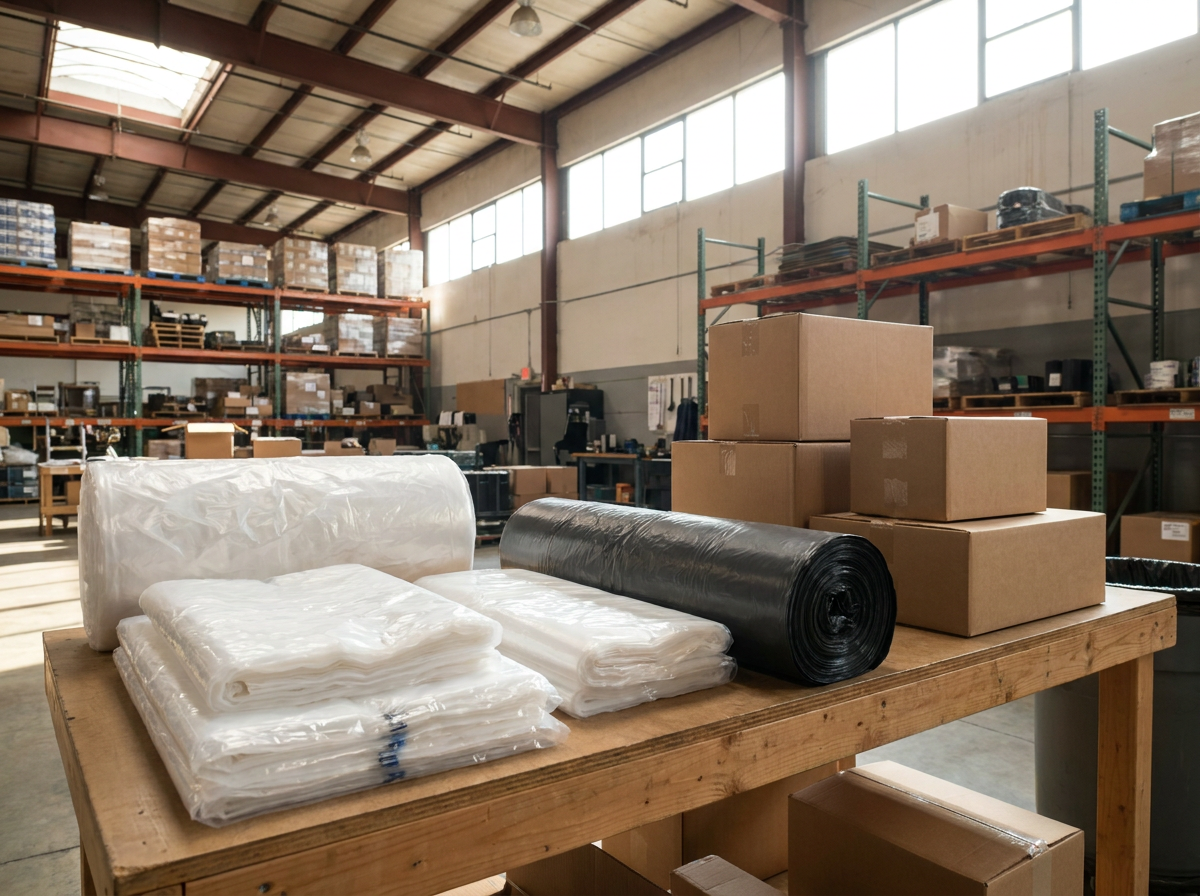
Poly bags and liners look simple until a bag splits under a full load or a liner slips into the bin. Most problems come from buying on price alone instead of matching the bag to the job. This guide covers the four things that matter: what the bag will hold, how thick it needs to be, what it is made of, and how it closes.
Start With What the Bag Has to Do
Before you look at sizes, write down the job. A bag that protects a part from dust has different needs than a liner that holds broken pallet wood or wet waste. Weight, sharp edges, moisture, and how long the contents sit all change the right choice.
- Packing and protecting products: clear bags, light to medium thickness.
- Lining trash and recycling bins: liners sized to the bin and rated for the load.
- Holding sharp or heavy items: thicker material, often a heavier liner.
- Storing parts or inventory: resealable or open-top bags that are easy to label.
Get the Size Right
Measure the item or bin, not the shelf space. For flat bags, allow extra length so the bag can be folded or sealed. For liners, measure the bin's circumference and height, then choose a liner that overhangs the rim by a few inches so it stays in place.
Too small and the bag stresses at the seams. Too large and you waste material and make a loose, messy package.
- Flat poly bags: measure width and length of the item, then add room for closing.
- Gusseted bags: use for bulky or irregular items that need depth.
- Liners: match bin width and height, and leave an overhang at the rim.
Understand Gauge and Thickness
Thickness is usually listed in mil for poly bags and in microns or mil for liners. A higher number means a thicker, tougher bag, but it also costs more per bag. The goal is the lightest bag that does the job without splitting.
If you are unsure, test a small quantity under real conditions before buying a full case.
- Lighter gauges suit dry, light items with no sharp edges.
- Medium gauges handle general warehouse parts and everyday trash.
- Heavier gauges suit sharp, heavy, or abrasive contents.
Pick the Right Material
Most poly bags and liners are made from low-density or high-density polyethylene. Low-density material is flexible and puncture resistant, which suits items with corners or edges. High-density material is thinner for its strength and works well for lighter, high-volume jobs like office and breakroom bins.
Ask whether you need clear bags so contents can be seen at a glance, or colored liners to separate waste streams.
- Low-density: flexible, stretches before it tears, good for irregular loads.
- High-density: crisp, strong for its thickness, good for light and clean waste.
- Clear versus colored: clear for inspection, color for sorting.
Choose a Closure That Fits Your Workflow
How a bag closes affects speed on the packing line. Open-top bags are fastest to fill. Self-seal and resealable bags suit parts that get opened and closed. Bags that will be heat sealed or taped need a clean, flat opening.
- Open-top: quick to fill, closed with tape, ties, or a heat sealer.
- Self-seal strip: peel and press, no extra tools.
- Resealable: best for parts you access repeatedly.
Related: Poly bags, liners, and packaging supplies at American Price Mark
Label the Bags So Nothing Gets Lost
A bag with no label is a guess. Part numbers, lot codes, and barcodes on poly bags speed up picking and receiving, and cut mix-ups. Labels need an adhesive that bonds to polyethylene, which is a low-energy surface, so tell your supplier what the bag is made of when you order.
Related: Custom product labels · Barcode labels
Buy Packaging Supplies and Labels From One Florida Source
We are a Florida manufacturer with more than 40 years in the label industry, and our sister company American Price Mark also supplies poly bags, liners, boxes, tapes, and other shipping and facility supplies. If your bags need labels, send us the bag material and size. Proofs go out within 24 hours, and we are open 8am to 8pm, seven days a week.
Related: Get a free quote · American Price Mark packaging supplies
Frequently Asked Questions
What thickness of poly bag do I need for a warehouse?
It depends on the contents. Light, dry items need a lighter gauge. Sharp or heavy items need a thicker bag. Test a small batch under real conditions before ordering a full case.
What is the difference between LDPE and HDPE liners?
Low-density liners are more flexible and resist punctures, so they suit irregular or sharp items. High-density liners are strong for their thickness and suit light, high-volume waste.
How do I size a liner for a bin?
Measure the bin's width and height, then choose a liner that overhangs the rim by a few inches so it stays in place and does not slip down.
Can labels stick to poly bags?
Yes, but polyethylene is a hard surface to bond to. Tell your label supplier the bag material so they can choose a suitable adhesive.
Need Custom Labels or Packaging Supplies?
Florida manufacturer, 40+ years of experience, proofs in 24 hours. Open 8am to 8pm, seven days a week.
Get a FREE Quote